
Lecos
Choosing the right Glass Oil Bottles is more than comparing shapes, colors, and wholesale prices. Buyers must examine material quality, closure performance, filling efficiency, and shelf presentation. A bottle may look elegant on a sample table, yet fail when exposed to repeated handling or transport vibration.
Industry data supports this careful approach. Grand View Research identifies glass packaging as a major global packaging segment, supported by its recyclability, chemical stability, and premium appearance. The report also highlights rising demand for sustainable packaging across food and beverage markets. Meanwhile, the European Container Glass Federation reports that glass containers can be recycled repeatedly without losing their basic quality. These findings matter to wholesalers planning long-term supply programs, not only short promotional campaigns.
This guide reviews the Top 10 Glass Oil Bottles for Wholesale Buyers. Each option is considered through practical purchasing criteria, including bottle strength, neck finish, cap compatibility, oil visibility, labeling space, and pallet efficiency. Dark amber glass may help limit light exposure, while clear glass can showcase color and clarity. The choice depends on the product and target market.
Price is important. It is not everything.
Some supplier claims also deserve closer inspection. “Eco-friendly” can describe the material, but not always the full supply chain. Freight distance, secondary packaging, breakage rates, and recycled content should be verified before signing a large order. The best bottle is rarely the most attractive sample. It is the one that performs reliably from filling line to customer shelf.
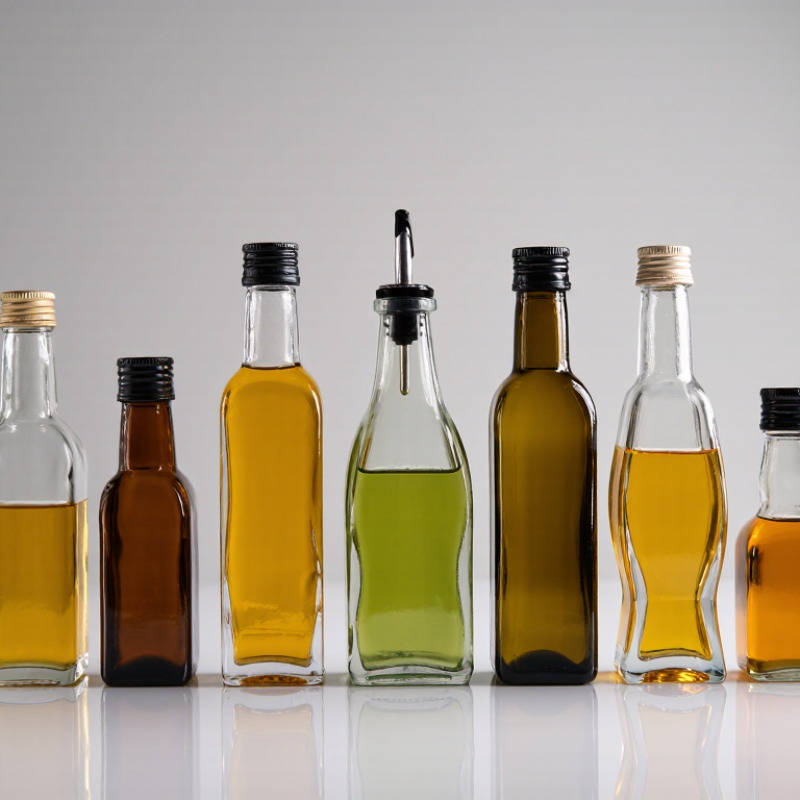
Top 10 Glass Oil Bottles for Wholesale Buyers?
A glass oil bottle must do more than look good on a shelf. For wholesale buyers, consistent capacity, dependable closures, and sturdy packaging affect every order. Check the bottle’s weight and dimensions against filling equipment and shipping cartons. Small details matter. A neck that feels slightly uneven can slow capping or cause leaks.
Choose glass that offers good clarity and handles the intended oil without unwanted odor transfer. Dark or UV-protective glass may help limit light exposure for some oils, but it can make the contents harder to inspect. Match the closure to the product and filling process. Then test samples with the actual oil, cap, and label. Test the real pack. Turn filled bottles on their sides and inspect them after transport simulation.
Wholesale suitability also depends on repeatability. Ask suppliers for specifications, sample checks, and details about how defects are monitored between production runs. Inspect several bottles, not just one polished sample. Look for bubbles, chips, inconsistent color, and variations in thread fit. No bottle is perfect, and heavier glass can feel premium while increasing freight costs or breakage risk. A practical choice balances appearance, filling speed, protection, and landed cost. Before placing a large order, compare packed samples in the cartons you plan to use.
Round glass bottles suit everyday retail oils because they fit standard shelves and are easy to label. Square-shoulder bottles use space efficiently in cartons and display cases. They also stay put on crowded restaurant tables. Slim cruets with controlled-flow inserts work well for cafés and tasting rooms, where staff need measured pours. The insert matters; an attractive bottle that drips can quickly frustrate buyers.
Dark green or amber glass helps limit light exposure, making it a practical choice for oils displayed near windows. Clear glass shows color, but needs more careful storage. The International Olive Council’s 2023/24 estimates put global olive-oil consumption at about 2.8 million tonnes, supporting demand across retail and food service. That figure covers olive oil, not every cooking oil, so buyers should match bottle design to their actual product mix.
For wholesale orders, compare neck finishes, closure fit, case dimensions, and label area before choosing a shape. Test a filled sample. Glass weight and shipping damage can change the economics. The U.S. EPA’s 2018 Facts and Figures report recorded a 25% recycling rate for glass containers and packaging; local collection systems vary, so avoid assuming every bottle will be recycled. A wide-mouth format can suit infused oils, though cleaning and residue checks take extra care.
| # | Bottle Type | Common Capacity | Typical Glass | Common Closure or Dispensing Option | Best Commercial Uses | Wholesale Considerations |
|---|---|---|---|---|---|---|
| 1 | Round olive oil bottle | 250–750 ml | Clear, green, or amber soda-lime glass | Screw cap, pourer, or tamper-evident closure | Everyday cooking oils, retail olive oil, and food-service refills | Versatile shape with broad shelf appeal; confirm neck finish compatibility with the intended cap or pourer. |
| 2 | Marasca-style bottle | 250–1,000 ml | Usually green or clear soda-lime glass | Screw cap or compatible pourer insert | Olive oil, infused oils, and vinegar sold in specialty food shops | Its square profile can pack efficiently; check carton layout and bottle dimensions before ordering pallets. |
| 3 | Dorica-style bottle | 250–1,000 ml | Clear, green, or amber soda-lime glass | Screw cap, pilfer-proof cap, or pourer | Premium-positioned oils, dressings, and gourmet food retail | Tall, cylindrical proportions suit label presentation; verify label height and width against the bottle’s curved surface. |
| 4 | Flask-shaped oil bottle | 100–500 ml | Clear or colored soda-lime glass | Screw cap, cork-style closure, or pourer | Gift sets, tasting portions, and specialty or souvenir retail | Distinctive profiles can require custom dividers or inserts for shipping and gift packaging. |
| 5 | Square oil bottle | 250–750 ml | Clear, green, or amber soda-lime glass | Screw cap or dispensing pourer | Retail oils, private-label food products, and space-conscious shelf displays | Flat panels provide label space and can help with case packing; allow for corner protection during transport. |
| 6 | Boston round bottle | 60–500 ml | Amber, clear, or green glass | Screw cap, reducer insert, or dropper-style closure | Small-batch culinary oils, concentrated flavor oils, and sample packs | Common neck and closure formats are widely available; confirm food-contact suitability for the complete package. |
| 7 | Miniature oil bottle | 20–100 ml | Clear, green, or amber glass | Screw cap, tamper-evident cap, or pourer | Product samples, travel assortments, hospitality amenities, and promotional sets | Small formats need proportionate labels and secure secondary packaging to reduce breakage in transit. |
| 8 | Wide-mouth oil bottle | 250–1,000 ml | Clear or colored soda-lime glass | Wide-mouth screw cap, liner, or compatible dispensing insert | Infused oils containing larger ingredients, food-service use, and refill programs | Match the opening and closure to the product and filling process; test pouring performance with the actual oil. |
| 9 | Oil cruet bottle | 150–500 ml | Clear soda-lime glass, sometimes with a handle | Pouring spout, stopper, or cap | Restaurant table service, catering, and reusable kitchen dispensers | For repeated use, consider ease of cleaning, replacement-pourer availability, and secure transport packaging. |
| 10 | Decorative embossed bottle | 250–750 ml | Clear, green, or amber soda-lime glass | Screw cap, cork-style closure, or pourer | Gift packaging, premium food retail, and specialty product lines | Embossing adds visual texture but can affect label placement; assess mold costs, minimum order quantities, and lead time. |
Capacities and closure options are common market ranges, not fixed specifications. Confirm bottle dimensions, neck finish, food-contact requirements, filling-line compatibility, and shipping protection with the supplier before placing a bulk order.
Top 10 Glass Oil Bottles for Wholesale Buyers?
Top 10 Glass Oil Bottles Compared by Design and Function
A useful comparison starts with the shape. Round, narrow-neck bottles are easy to label and fit neatly on shelves, while square bottles use space efficiently in shipping cartons. Cruet-style bottles offer controlled pouring, but their spouts need careful cleaning. Swing-top designs seal firmly, though the hardware adds weight. Cork-stopper bottles look simple and traditional; they may be less convenient for frequent kitchen use. Small details matter.
Glass color and access affect daily handling. Amber glass helps shield oil from light, while clear glass makes the contents easy to inspect. Embossed bottles feel distinctive, but deep patterns can collect residue. Wide-mouth bottles are easier to fill and clean, yet pouring may be less precise. Handled bottles offer a steadier grip, especially in larger sizes. Slim, tall bottles save shelf space, but can tip more easily. No design wins every shelf.
Tips: Test samples with the oil and closure you plan to use. Check pouring speed, drips, cap fit, label placement, and carton protection. Compare usable capacity, not just overall height. A bottle that looks elegant may still be awkward to refill. Test it in a real kitchen.
Compare common bottle formats by nominal capacity—a practical starting point for wholesale sourcing.
Capacities shown are representative sizes commonly offered for these formats, not a sales ranking. Actual dimensions and available capacities vary by supplier; confirm product specifications before ordering.
Wholesale buying depends on capacity, closures, packaging, and total cost. In practical sampling, 250 ml and 500 ml bottles often balance shelf presence and shipping weight. Larger 750 ml bottles suit family-use oils, but they require stronger cartons. A 2024 Grand View Research report valued the global glass packaging market at approximately USD 77.3 billion in 2023. This growth reflects demand for durable, recyclable containers. Still, market growth does not guarantee a profitable bottle choice.
Closure performance deserves close testing. A screw cap with a suitable liner can reduce leakage during long-distance transport. Tamper-evident features also support retail confidence. Check neck finish, torque range, oil compatibility, and filling-line speed before placing a large order. Packaging costs can exceed expectations. Smithers’ packaging research highlights rising pressure on material efficiency and transport costs. A lighter bottle may lower freight expenses, but it can break more easily. That trade-off needs real drop testing. My own cautious view: a low unit price is rarely the complete cost.
Tips: Request samples from at least three suppliers. Test filled bottles upside down for 24 hours. Measure carton dimensions, pallet stability, and breakage rates. Ask for packaging test records, but verify them independently. Compare landed cost, not only factory price. Leave room for mistakes. A perfect forecast is unrealistic, especially when fuel, glass, and freight prices change.
When comparing glass oil bottle suppliers for bulk orders, request a production sample, not just a catalogue photo. Check that the bottle stands evenly, the neck fits its closure, and the glass has no visible cracks or sharp seams. Small details matter. Fill a sample with water, close it, and lay it on its side over a clean paper towel. This simple check can reveal leaks before a large shipment is packed.
Ask for written specifications covering capacity, dimensions, glass color, closure materials, and acceptable defect limits. Confirm the minimum order quantity, lead time, payment schedule, and how the supplier handles damaged goods. A low unit price may not include protective dividers or export cartons. Request packaging photos, then test a packed sample if possible. Custom colors and shapes can look appealing, but they may add cost or extend production time.
Reliable suppliers explain their quality checks and provide updates when schedules change. Ask how they inspect batches, track production, and maintain consistency between repeat orders. Request recent inspection records or relevant product documentation, and verify that the details match your intended market and use. Ask again if an answer feels vague. No sample can guarantee every bottle in a large run will be identical, so agree on inspection criteria before production begins.
Round bottles are easy to label and fit neatly on shelves. Square bottles use carton space efficiently. Neither shape is perfect.
Amber glass helps shield oil from light. Clear glass makes the contents easier to inspect. Choose based on storage and display needs.
Swing-top closures seal firmly but add weight. Cork stoppers look traditional, while cruet spouts allow controlled pouring. Check the fit.
Wide mouths are easier to fill and clean, but pouring may be less precise. Deep embossing can collect residue. Small details matter.
Fill it with water, close it, and lay it on a clean paper towel. Wait and check for damp spots. Simple, but useful.
Ask for written details on capacity, dimensions, glass color, closure materials, and defect limits. Also confirm minimum quantities and lead times.
Request packaging photos and, if possible, test a packed sample. Protective dividers may affect the final cost. I would not assume they are included.
No. A sample helps, but batches can vary. Agree on inspection criteria before production, and question answers that feel vague.
This guide explores what makes Glass Oil Bottles a practical choice for wholesale buyers, from durable construction and clear product presentation to designs suited to different oils and commercial settings. It compares ten bottle styles by shape, functionality, and intended use, helping buyers consider options for retail shelves, food service, gifting, or everyday storage. The overview also explains how bottle capacity, closure type, protective packaging, and unit cost can affect product suitability and overall purchasing value.
For bulk orders, selecting the right bottle is only part of the process. Buyers should also assess supplier reliability, product consistency, communication, quality checks, and the ability to meet order and delivery requirements. By weighing these factors together, businesses can choose packaging that fits their needs, protects the contents, and supports efficient wholesale purchasing.
