Lecos
Choosing a reliable Glass Bronzer Jar supplier requires more than comparing catalog prices. Global buyers must examine glass quality, decoration accuracy, closure compatibility, production capacity, and export experience. A bronzer jar may look simple, yet its thick base, smooth rim, and color coating demand careful manufacturing control. Small defects can affect shelf appeal, filling efficiency, or customer confidence.
David Luttenberger, a recognized packaging industry analyst, offers a useful perspective: “Packaging must protect the product, communicate value, and support responsible material choices.” This principle guides our review of the Top 10 Glass Bronzer Jar Suppliers for Global Buyers. Each supplier should be assessed through practical evidence, including factory capabilities, sample consistency, quality certifications, lead times, and communication during development. Beautiful samples are not enough.
Real purchasing conditions are less perfect.
Some suppliers excel at custom colors but lack flexible minimum order quantities. Others provide strong production capacity but limited decoration options. Buyers should request physical samples, inspect the inner surface, and test the jar with the intended bronzer formula. Compatibility matters, especially when formulas contain oils, pigments, or botanical extracts. Packaging failures often appear late, after bulk production begins.
This guide compares suppliers from a buyer’s perspective. It considers design flexibility, manufacturing reliability, logistics support, and long-term cooperation. The ranking is not absolute. A supplier suitable for a luxury launch may not fit a growing independent brand. Careful verification remains essential.
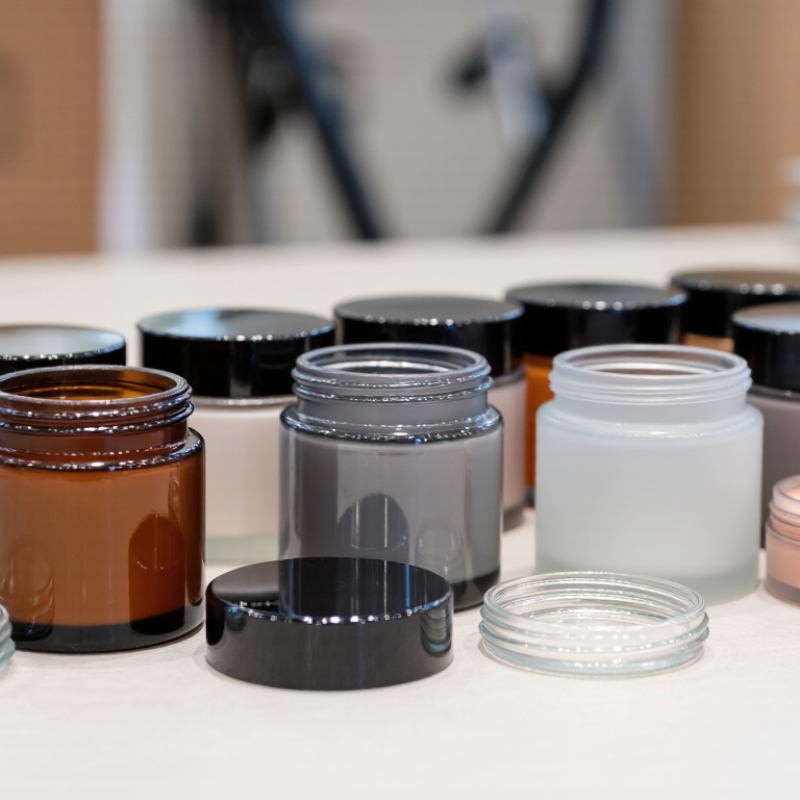
A reliable glass bronzer jar supplier proves consistency before discussing price. Ask for dimensional tolerances, wall-thickness records, closure-fit tests, and batch inspection photos. In practical sourcing, a jar that looks perfect can still leak around the neck. The supplier should provide test methods, sampling levels, and corrective-action records. Traceability matters too. Each pallet should connect to a production lot, furnace date, and inspection result.
Sustainability claims need evidence, not polished language. FEVE’s European Container Glass data reports glass packaging recycling rates above 75% in Europe. UNEP’s Global Resources Outlook 2024 warns that global resource extraction could rise 60% by 2060 without stronger efficiency measures. Ask about recycled cullet content, energy use, and transport distance. Request third-party certificates and current audit dates. A supplier may meet one standard and still miss another. That is easy to overlook.
Tips: Order pilot batches before annual contracts. Test filled jars through vibration, heat, and drop conditions. Compare five consecutive lots, not one attractive sample. Confirm mold ownership and replacement lead times in writing. Avoid vague promises. Even experienced buyers can trust appearance too quickly; a strong checklist should challenge that instinct.
How the Top 10 Global Suppliers Are Selected
The top ten glass bronzer jar suppliers are selected through practical, evidence-based checks. Manufacturing experience matters, but years alone prove little. We review production records, export history, and sample consistency across several batches. A reliable supplier should provide clear glass specifications, including capacity, wall thickness, closure fit, and surface finish.
Product safety and compatibility receive close attention. Samples are tested with bronzer formulas for leakage, staining, odor transfer, and lid performance. Packaging tests also examine vibration, stacking pressure, and temperature changes during international transport. Suppliers with documented quality systems, traceable inspections, and relevant compliance files earn stronger consideration. However, paperwork cannot replace physical testing.
Commercial reliability shapes the ranking as well. We compare minimum order quantities, tooling terms, lead times, replacement policies, and communication speed. A supplier that answers technical questions clearly is easier to manage when designs change. Sustainability claims are checked through material data, recycled-content evidence, and realistic shipping practices. Vague promises are not enough.
There are limits. Supplier performance can change after the first successful order. Even a well-tested jar may face delays, color variation, or damaged cartons. That is why the selection process includes recent samples, written specifications, and small trial orders before larger commitments. Price remains relevant, but the lowest quote may hide fragile glass, weak closures, or costly rework. A fair comparison must consider the complete delivered cost, not just the unit price.
Top 10 Glass Bronzer Jar Suppliers for Global Buyers
The strongest glass bronzer jar suppliers offer more than attractive packaging. They explain glass composition, wall thickness, and compatibility with pressed or cream formulas. Many provide soda-lime glass for cost control, while premium projects may require heavier flint glass. Ask for test samples before approving large production.
Supplier profiles often reveal useful design differences. Some specialize in round jars with wide pans and easy-to-clean shoulders. Others develop square, oval, or low-profile shapes for compact retail displays. Custom options may include frosted surfaces, colored glass, silk-screen printing, hot stamping, and molded logos. Closure choices also matter, especially when the jar includes a mirror, sifter, or magnetic component.
Details expose reliability.
Experienced suppliers should provide dimensional drawings, material declarations, drop-test records, and production inspection procedures. Confirm the actual filling volume, not only the external size. A jar that looks generous may hold less product than expected. Request color samples under daylight and indoor lighting, because coatings can shift noticeably. Decoration sometimes wears near the lid edge, an issue that catalog images rarely show.
Global buyers should compare tooling fees, minimum order quantities, lead times, packing methods, and replacement policies. Clear communication is part of technical quality. However, no supplier is perfect; even a detailed profile may omit production limitations. A practical buyer should record every promise in the quotation, then verify it against pre-production samples and a signed specification.
Top 10 Glass Bronzer Jar Suppliers for Global Buyers
Quality begins with measurable glass performance, not attractive product photos. Reliable suppliers should provide dimensional tolerances, wall-thickness data, and batch traceability. Ask for test reports covering leakage, thermal shock, impact resistance, and coating adhesion. These details matter when a bronzer jar travels through warehouses, trucks, and humid retail environments.
Look for documented quality systems, such as ISO 9001, ISO 14001, or ISO 22716 where cosmetic production controls apply. ISO 15378 may offer additional value for suppliers serving highly regulated packaging projects. Certifications should be verified with current certificates and clear issuing bodies. A certificate alone proves little. Supplier audits, retained samples, and corrective-action records reveal more about daily discipline. Some factories provide excellent reports but respond slowly when defects appear. That weakness deserves attention.
Production capability also separates capable partners from trading companies. Review furnace capacity, mold-making control, color consistency, decoration options, and inspection equipment. Confirm whether the supplier can manage small pilot runs before larger orders. Check minimum order quantities, tooling ownership, lead times, and export packaging. A practical sample review should include jar weight, lid fit, filling compatibility, and surface feel. Minor flaws can become expensive at scale. Even experienced buyers sometimes overlook secondary packaging damage. That mistake is avoidable. Ask for pre-shipment inspection rules, photo records, and a clear claim process before signing any purchase agreement.
How to read this chart: Publication years are shown for selected ISO standards that buyers may use when assessing packaging suppliers. ISO 15378 is specifically for pharmaceutical packaging materials; the other standards address quality, environmental, and occupational health and safety management systems. These dates do not indicate that any particular glass jar supplier is certified.
For global buyers, a glass bronzer jar’s unit price is only part of the landed cost. Ask suppliers to quote the jar, lid, insert, decoration, and export packing separately. Minimum order quantities can rise when colors, coatings, or custom molds are involved. Request prices at several volumes, such as 5,000, 10,000, and 25,000 units, and confirm whether samples are credited against production. Small details matter: a heavier base may look premium but add freight cost. Quotes are not always directly comparable.
Shipping needs early attention. UNCTAD’s Review of Maritime Transport 2024 reports that more than 80% of world trade by volume moves by sea, making port capacity and freight conditions relevant to delivery planning. Ask for carton dimensions, gross weight, pallet configuration, production lead time, and the named delivery point. Compare sea freight with air freight only when urgency justifies the higher cost. A port delay can erase savings from a lower factory quote. Build in a buffer; estimates can still miss.
Tips: Request a packed sample and test it for chips, leakage around the closure, and carton strength. Confirm who pays for tooling, inspection, and freight-related surcharges. Keep written approval for color and finish. One overlooked question: does the quoted MOQ apply per jar design, or across the entire order?
The entries below are supplier profiles by manufacturing and distribution model, not named companies. Price and MOQ figures are indicative planning ranges for standard cosmetic glass jars and are not verified supplier quotations. Actual costs depend on capacity, glass weight, decoration, closure, order volume, destination, and current freight rates.
| Rank | Supplier Profile | Typical Jar Offering | Indicative Unit Price (FOB) | Typical MOQ | Customization | Shipping Considerations | Best Fit |
|---|---|---|---|---|---|---|---|
| 1 | Large-scale glass packaging manufacturer | Standard round jars, commonly around 30–100 ml, with screw-neck finishes | About US$0.25–$0.80 per jar for standard stock designs | 5,000–20,000 units | Color, frosting, printing, and custom molds may be available; custom tooling typically raises cost and lead time. | Full-container shipments can reduce freight cost per unit. Confirm export packaging and breakage allowances. | High-volume brands seeking lower unit costs |
| 2 | Mid-sized cosmetic-container factory | Glass jars with coordinated caps and liners for pressed or loose powder products | About US$0.35–$1.10 per jar, depending on decoration and closure | 3,000–10,000 units | Common options include screen printing, hot stamping, frosting, and colored glass, subject to production capability. | Request packed-carton dimensions and gross weight before comparing ocean and air freight. | Mid-sized orders with moderate customization |
| 3 | Stock-packaging distributor | Ready-to-ship jars in common capacities, often with standard lids | About US$0.60–$2.00 per jar, excluding freight and taxes | 100–1,000 units | Usually limited to available colors, labels, or secondary packaging; custom glass molds are uncommon. | Regional warehouse stock can shorten delivery time; verify available inventory and destination-country duties. | Samples, pilot launches, and small businesses |
| 4 | Premium glass-packaging specialist | Thick-wall, weighted-base, or high-clarity jars designed for prestige cosmetics | About US$1.00–$4.00 per jar before freight | 1,000–5,000 units for selected stock designs; custom projects may require more | Advanced decoration and bespoke shapes may be offered, with tooling and sampling charges quoted separately. | Heavier jars increase freight and handling costs; use robust dividers and protective outer cartons. | Prestige positioning and gift-ready products |
| 5 | Regional packaging wholesaler | Common cosmetic jars sourced from multiple glass manufacturers | About US$0.70–$2.50 per jar, varying by origin and order size | 200–2,000 units | Selection may include several jar and lid styles, but decoration is often outsourced or unavailable. | Local or regional distribution may reduce transit time and simplify replenishment; check whether prices include local delivery. | Buyers prioritizing quick, flexible purchasing |
| 6 | Custom-mold glass packaging producer | Distinctive jar shapes or proprietary dimensions developed to buyer specifications | About US$0.80–$3.50 per unit at production scale; tooling is additional | 10,000–30,000 units, depending on mold and production requirements | High design flexibility; request mold ownership, maintenance, and exclusivity terms in writing. | Allow for design approval, mold trials, production, and international transit when planning launch dates. | Brands requiring a differentiated, exclusive package |
| 7 | Recycled-glass packaging supplier | Jars made with recycled glass content, where available in the supplier's production range | About US$0.50–$1.80 per jar, depending on recycled content and finish | 3,000–15,000 units | Color consistency and decoration options vary. Request documented recycled-content claims and samples. | Confirm the supplier's packaging and pallet specifications; heavier or fragile loads need suitable protective packing. | Buyers seeking recycled-material options |
| 8 | Glass-and-closure packaging integrator | Jar, lid, liner, and optional applicator or inner component supplied as a coordinated set | About US$0.70–$2.80 per complete set, depending on components | 1,000–10,000 sets | Can simplify component matching; confirm compatibility, sealing performance, and material specifications. | Consolidating components may simplify purchasing, but check whether all items ship together and under the same Incoterm. | Buyers seeking a single coordinated packaging order |
| 9 | Regional glass-container manufacturer | Locally produced standard jars with a narrower range of sizes and finishes | About US$0.40–$1.50 per jar, depending on local production costs | 1,000–10,000 units | Customization may be more limited than at large export factories; ask about minimum runs for color and printing. | Shorter regional transit may be possible. Compare local delivery charges, customs exposure, and production capacity. | Buyers looking to reduce long-distance shipping complexity |
| 10 | Export-focused packaging supplier | Export-ready stock jars and selected custom options for international orders | About US$0.40–$1.60 per jar, excluding freight and import charges | 2,000–10,000 units | May offer export documentation and decoration coordination; confirm available testing and compliance documents for the destination market. | Compare FOB, CIF, and DAP quotations carefully. Clarify who handles customs clearance, insurance, and import duties. | First-time international buyers needing export coordination |
Reliability means consistent dimensions, wall thickness, closure fit, and inspection results across several production lots.
Request leakage tests, thermal shock results, impact tests, coating adhesion records, and corrective-action reports.
Compare samples from five consecutive lots, not only one attractive jar. Small differences can become costly.
Each pallet should connect to a production lot, furnace date, and inspection result. Traceability helps locate defects quickly.
Ask for recycled glass content, energy data, transport distance, current audits, and independent certificates. Polished claims are not enough.
Yes. Test filled jars through vibration, heat, humidity, and drop conditions before signing larger commitments.
Review furnace capacity, mold control, color consistency, decoration options, inspection equipment, and small-batch flexibility.
Confirm minimum order quantities, tooling ownership, replacement times, lead times, packaging, and defect-claim procedures.
No. Current certificates help, but retained samples, factory audits, and response speed reveal daily performance.
Do not trust appearance too quickly. A beautiful jar may still leak around the neck or arrive with damaged packaging.
Choosing a reliable Glass Bronzer Jar supplier involves more than comparing product photos. Buyers should assess material quality, design consistency, customization options, communication, and the supplier’s ability to meet production schedules. A careful selection process can consider manufacturing experience, product range, quality controls, certifications, and capacity to support orders of different sizes. Comparing these factors helps global buyers identify suppliers that align with their packaging needs and purchasing requirements.
Before placing an order, confirm specifications such as jar capacity, glass finish, closure compatibility, decoration, and packaging. Discuss pricing, minimum order quantities, sample availability, lead times, and shipping arrangements in advance. Reliable quality standards and clear production processes can help reduce surprises, while planning for logistics and delivery timelines supports smoother international procurement. These considerations offer a practical framework for evaluating suppliers and choosing a glass jar solution suited to a bronzer product.
