 Lecos
Lecos
Lecos
Lecos
A Glass Makeup Jar is a small container designed for creams, balms, masks, and other beauty formulas. Its transparent body reveals the product’s color, texture, and remaining volume. This simple feature can strengthen shelf appeal, but it also exposes fingerprints, air bubbles, and filling mistakes. Small details matter. A jar may look luxurious, yet perform poorly if its closure leaks or its glass feels too fragile.
Choosing the right Glass Makeup Jar requires more than comparing shapes and prices. In practical packaging evaluations, I would inspect the glass thickness, rim smoothness, lid fit, inner seal, and surface finish. A wide mouth helps users remove dense cream with a spatula. However, it may increase contact with air and fingers. An airtight or tightly sealed design can better protect sensitive formulas, though performance depends on the product itself. Check compatibility through professional testing rather than relying on appearance alone.
Consider the complete user experience. Can the jar stand firmly on a wet bathroom shelf? Is the label readable under warm lighting? Does the lid open without slipping from oily hands? These questions are easy to overlook. They should not be. Clear, amber, frosted, and colored glass each create different visual and protective effects. Darker glass may help reduce light exposure, but it does not replace proper formulation and storage advice. There is no perfect jar. The best choice balances product stability, filling efficiency, brand image, transport needs, and customer habits. A careful decision may feel slower, but it usually prevents expensive packaging problems later.
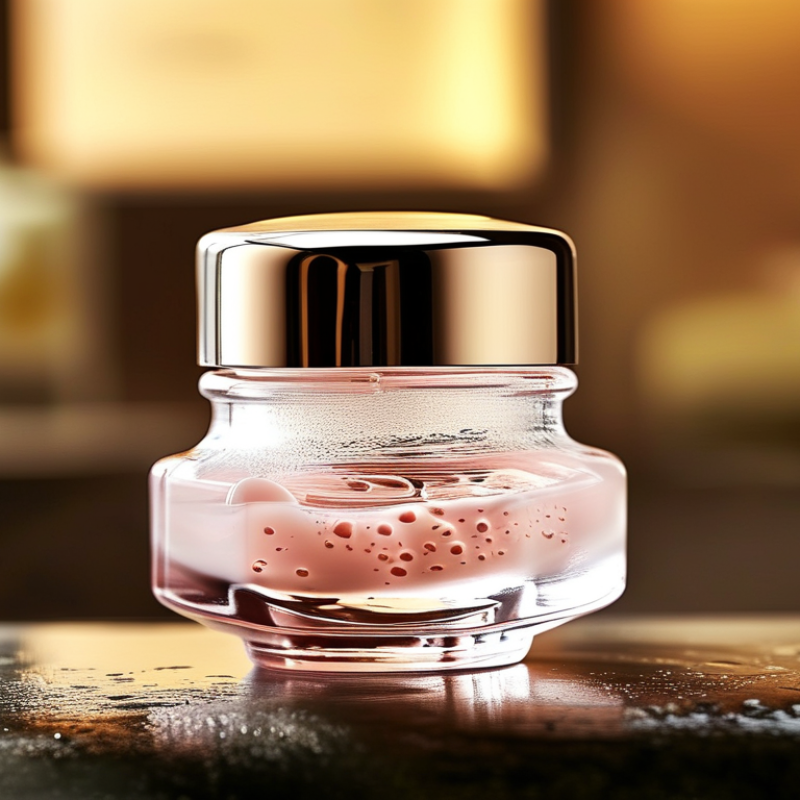
A glass makeup jar is a small container made mainly from glass for creams, balms, masks, and thick cosmetic formulas. Its body usually includes a wide opening, a screw-on lid, and sometimes an inner seal. The glass keeps the product visible and does not easily absorb oils, pigments, or fragrance. That matters when a formula is rich or strongly colored. It also gives a cool, smooth touch during daily use.
In practical use, glass feels stable on a bathroom shelf. A wide mouth makes it easier to scoop dense cream with a clean spatula. However, fingers can introduce water, dust, and bacteria. A jar is not automatically hygienic. Washable tools and dry hands still matter. I have found that dark or opaque glass can better protect light-sensitive formulas, although the label should confirm the product’s storage needs. Clear glass looks attractive, but sunlight may reduce stability.
Choosing one requires more than checking appearance. Look for thick, evenly formed glass without sharp edges, bubbles, or tiny cracks. Check that the lid closes firmly and that the inner liner fits flat. The jar should match the formula’s texture and filling volume. A very wide jar is convenient, yet it exposes more product to air. A heavy jar feels premium, but it may break during travel. I still think durability is sometimes judged too quickly by weight. Reliable cosmetic packaging should be tested for leakage, compatibility, temperature changes, and repeated opening.
| Selection Dimension | What It Means | Common Options or Facts | Choosing Guidance |
|---|---|---|---|
| Definition | A glass makeup jar is a small container made primarily from glass for holding cosmetic products. | It may be used for face cream, eye cream, balm, mask, loose pigment, or other semi-solid formulas. | Choose a jar according to the formula, required capacity, dispensing method, and packaging environment. |
| Glass Type | The glass type affects chemical resistance, appearance, durability, and manufacturing cost. | Cosmetic jars commonly use soda-lime glass, while some higher-performance packaging may use more chemically resistant glass. | For standard skincare products, select a jar designed for cosmetic use and verify compatibility through stability testing. |
| Capacity | Capacity is the approximate amount of product the jar can hold, usually expressed in milliliters or fluid ounces. | Common cosmetic capacities include approximately 5 ml, 15 ml, 30 ml, 50 ml, and 100 ml. | Match the jar size to the product quantity, application frequency, shelf life, and expected portability. |
| Shape and Profile | The shape influences appearance, storage efficiency, labeling area, and ease of use. | Typical shapes include round, square, rectangular, low-profile, and wide-mouth jars. | Select a stable base and a shape that allows users to access the product without excessive residue around the opening. |
| Closure | The closure helps protect the contents from leakage, contamination, moisture loss, and air exposure. | Common options include screw caps, press-on lids, inner liners, and secondary protective seals. | Choose a tight, compatible closure and test opening torque, leakage resistance, and repeated use. |
| Neck and Opening | The neck finish is the jar opening and the matching area where the lid is attached. | Wide openings support easy scooping, while narrower openings can reduce direct exposure to the contents. | Use a wide mouth for thick creams and balms; consider a smaller opening when minimizing exposure is important. |
| Color and Light Protection | Glass color affects visibility and the amount of light reaching the formula. | Clear glass shows the product clearly; amber, green, cobalt, frosted, or coated glass can provide greater light reduction. | Choose an opaque or tinted option for light-sensitive formulas, and confirm protection with product stability testing. |
| Product Compatibility | Compatibility describes how the formula interacts with the glass, lid, liner, decoration, and other packaging components. | Potential concerns include odor transfer, discoloration, leakage, corrosion of components, or changes in texture. | Test the filled package under normal, elevated, and reduced-temperature conditions before final selection. |
| Hygiene | A jar is repeatedly opened and may be touched during use, which can expose the product to air, moisture, and microorganisms. | Wide-mouth jars are convenient but generally provide more direct access than pump or airless systems. | Use a spatula when appropriate, keep the lid closed, and select a suitable preservative system for the formula. |
| Durability and Safety | Glass is rigid and chemically stable but can break if dropped or exposed to impact. | Thicker walls, rounded edges, protective packaging, and suitable transport testing can reduce breakage risk. | For travel or shipping, prioritize impact resistance, secure closures, and protective secondary packaging. |
| Weight | Glass is generally heavier than many plastic alternatives of a similar capacity. | A heavier jar can create a substantial feel but may increase shipping weight and handling requirements. | Balance premium appearance and stability against shipping cost, portability, and the intended distribution channel. |
| Decoration and Labeling | Decoration affects visual appeal, product identification, and the available information area. | Possible treatments include printed graphics, frosting, coatings, labels, and metalized effects. | Confirm decoration adhesion, readability, resistance to rubbing, and compatibility with filling and cleaning processes. |
| Sustainability | Glass can be recycled in suitable collection systems and does not rely on fossil-based plastic as its primary material. | Recycling availability varies by location, and coatings, mixed materials, or attached components may affect processing. | Prefer recyclable construction, minimize unnecessary components, and provide clear disposal guidance for the target market. |
: Glass protects creams, balms, and masks from moisture, oxygen, and many oils. It also feels stable in the hand. Users can see the formula’s color, texture, and remaining amount.
No. Glass is heavy and breakable. It can increase shipping emissions and handling costs. The best choice depends on the formula, closure, transport route, and daily use.
Soda-lime glass often suits standard creams and masks. Stronger glass may be safer when impact risks are higher. Testing matters more than appearance.
Clear glass displays the product attractively. However, sunlight may affect light-sensitive formulas near a bathroom window. Tinted glass can reduce light exposure. Neither option solves every stability problem.
A wide mouth allows easier access to thick creams. It also increases air exposure and finger contact. A spatula can improve cleanliness. The opening should match the formula and usage habits.
Request migration, leak, drop, and stability tests. Check the rim, lid fit, gasket, and inner surface. Test compatibility with acids, fragrances, oils, and pigments. A small sample can reveal large problems.
A 15-gram jar may suit trial quantities. Larger jars can work for frequent use. Heavy containers are less convenient for travel. Bigger is not always better.
Yes. I once preferred a narrow opening because it looked refined. Thick cream was difficult to remove. The design looked elegant, but daily use felt frustrating. Appearance needs practical testing.
Test filling, closing, opening, cleaning, and repeated handling. Check whether tools fit through the opening. Confirm measurements to within a few millimeters. Small dimensional errors can affect labels and equipment.
A Glass Makeup Jar is a small cosmetic container designed to hold products such as creams, balms, masks, powders, and other beauty formulas. Its wide opening makes the contents easy to access, while its stable shape supports convenient filling, application, and storage. Glass is often chosen for cosmetic packaging because it is durable, visually appealing, easy to clean, and less likely to retain odors or colors from previous contents. It can also help create a clean, premium presentation when paired with a suitable lid and inner seal.
When choosing a Glass Makeup Jar, consider its capacity, shape, closure, opening size, weight, and compatibility with the formula. A secure lid can help protect the product from air, moisture, and contamination. For daily use, remove the desired amount with clean hands or a cosmetic spatula, then close the jar promptly. Wash the empty jar with mild soap and warm water, rinse it thoroughly, and let it dry completely before reuse. Store it in a cool, dry place away from direct sunlight and sudden temperature changes.
