 Lecos
Lecos
Choosing a Glass Eyeshadow Jar in 2026 is about more than appearance. The right jar protects a delicate formula, feels steady in the hand, and makes daily use simpler. A clear glass base can show the shade accurately, while a wide opening makes fingertip or brush access easier. Small details matter.
Charles Eames, the renowned designer, offered a useful principle: “The details are not the details. They make the design.” He was not a cosmetics-packaging specialist, so this is a design insight, not a technical packaging claim. Still, it fits the choice of a Glass Eyeshadow Jar: the lid’s grip, the rim’s finish, and the jar’s weight can shape the whole experience.
There is no single best jar for every brand. A loose shimmer may need a secure closure and careful testing for leakage. A cream shadow may call for a different opening and interior shape. Glass can feel premium, but it is heavier and can break if dropped. That trade-off is easy to overlook. It deserves a closer look.
This guide compares capacity, glass quality, closure fit, usability, and decoration options. It also points out what product photos cannot tell you, such as how smoothly a lid turns or whether residue clings to the rim. The aim is practical: choose a jar that protects the formula and works well in real hands—not merely one that looks polished on a screen.
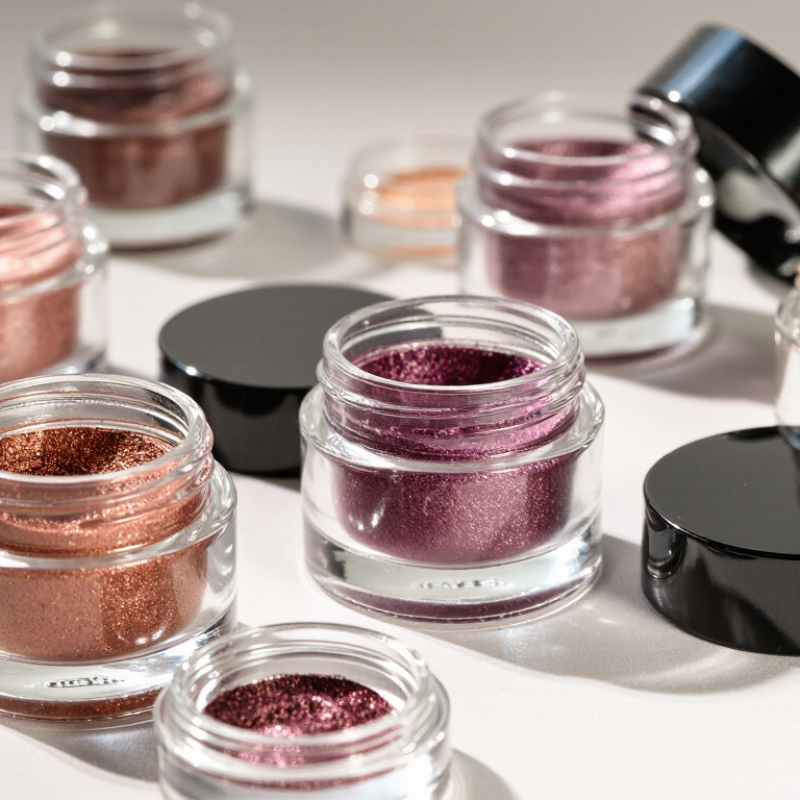
Start with how you actually use eyeshadow, not how a jar looks on a shelf. A neutral powder used daily needs different access than several shades saved for travel. Powder or cream? Loose powder benefits from extra headspace and a secure closure. Pressed pans need an opening wide enough for removal without scraping. Cream products may be easier to reach in a shallow, wide-mouth jar, especially when used with a clean brush.
Think about quantity and routine. A small jar suits a sample or a shade you use occasionally; a larger one can be awkward if it sits half-empty for months. I used to assume more capacity was always useful. It is not. Check the jar’s interior dimensions, since thick glass walls can reduce usable space. Also consider where it will live: a bathroom shelf, makeup drawer, or travel pouch each puts different demands on size and closure.
Glass lets you see the shade and remaining amount at a glance, but it can chip or break if dropped. Check that the lid closes evenly and, if possible, includes a liner that helps limit powder spills. A wide opening is convenient, though it may expose more product during use. Keep the container dry and clean, and choose a shape you can comfortably hold while applying makeup.
| How to Choose the Best Glass Eyeshadow Jar in 2026 - Identify Your Eyeshadow Storage and Usage Requirements | |||
|---|---|---|---|
| Selection Factor | What to Assess | Practical Guidance | Why It Matters |
| Eyeshadow format | Whether the product is loose powder, pressed powder, cream, or a liquid formula. | Choose a jar and closure designed for the formula. Loose powder generally benefits from a secure screw lid; cream formulas need a tight-fitting closure to limit drying. | Formula consistency affects how easily product can spill, dry out, or become contaminated during use. |
| Capacity and portion size | How much product is needed for a single shade, sample, refill, or multi-use item. | Compare the jar’s usable fill volume with the intended net product weight. Powder density varies, so volume should be confirmed with a test fill rather than inferred from weight alone. | A correctly sized jar helps reduce excess headspace and makes the product easier to store and use. |
| Jar opening | The diameter of the opening and whether it accommodates a brush, sponge applicator, or fingertip. | Select an opening wide enough for the intended applicator while leaving sufficient surface area for the product to remain protected by the lid. | An accessible opening improves everyday usability and can reduce product loss during application. |
| Glass type and thickness | Glass clarity, color, wall thickness, weight, and resistance to everyday handling. | Clear glass makes the shade visible; tinted or opaque glass offers more light protection. Check the finished jar for chips, cracks, and uneven edges before use. | Glass provides a rigid container and can be reused or recycled where suitable collection systems exist, but it can break if dropped. |
| Closure and seal | Thread fit, lid material, liner or insert, and resistance to loosening in storage. | Test the assembled jar in its intended orientation. For powders, check for leakage during handling; for creams, evaluate whether the closure helps limit air exposure. | A well-matched closure helps keep the product contained and reduces exposure to dust and moisture. |
| Portability and storage | How often the jar will be carried, packed, or stored with other cosmetics. | For travel or a makeup bag, prioritize a secure lid and a compact shape. Consider a protective pouch or divider because glass may break on impact. | Storage conditions and movement can affect both the container’s condition and the likelihood of spills or breakage. |
| Hygiene and reuse | Ease of cleaning, drying, refilling, and keeping fingers or tools from repeatedly contacting the product. | Choose a smooth interior that is easy to inspect and clean. Allow the jar and lid to dry fully before refilling, and use clean, dry applicators. | Cosmetic products can be affected by contamination; clean handling and proper storage help maintain product quality. |
| Product compatibility | Whether the complete package—including glass, lid, liner, and any coating—is suitable for the formula. | Run a compatibility check with the actual product over time, especially for creams or formulas containing oils, before selecting a final package. | Testing can reveal changes such as leakage, odor, discoloration, or deterioration of package components. |
| Labeling and identification | Space for the shade name, ingredients, net contents, usage details, and other required information. | Check that a label can be applied to the jar without covering essential product visibility or interfering with the lid. | Clear identification makes shades easier to find and supports accurate product information. |
| Safety and handling | Stability on a flat surface, edge finish, and suitability for the intended user and setting. | Inspect for sharp edges and unstable bases. Keep glass containers away from hard impacts and out of reach of young children. | Glass is rigid but breakable, so careful handling and suitable storage are important. |
Match the jar to the amount you use. A half-empty, oversized jar can be awkward to store.
Leave enough headspace and choose a secure lid. A very wide opening may let powder spill during use.
A shallow, wide-mouth jar makes cream easier to reach with a clean brush.
Thick glass walls can reduce usable space. Outside measurements do not tell the whole story.
Not necessarily. It handles temperature changes better, but that may not matter for room-temperature storage.
Make sure it closes evenly. A liner may help limit spills, but a poor fit can still let moisture in.
Round jars are easy to clean around the rim. Square jars fit display spaces neatly, though powder may collect in their corners.
Test a filled sample with the real product. Check brush access, stability, and carton fit. Small differences show.
Not always. I once assumed more capacity was useful, but unused space can make a jar harder to handle.
Choosing the best Glass Eyeshadow Jar in 2026 starts with how you plan to store and use your product. Consider whether you need a compact jar for everyday makeup, a larger container for frequent use, or a set of different sizes for multiple shades. Compare glass types, shapes, and openings to find a jar that is comfortable to handle, easy to access, and suitable for your storage space.
Next, examine the lid seal and any included applicator, since these can affect convenience and help keep the contents contained. Check that the jar’s materials are compatible with your eyeshadow and feel sturdy enough for regular use. Finally, weigh durability and sustainability against price: a well-made jar that fits your routine may offer better overall value than the cheapest option. By balancing practicality, safety, and cost, you can choose a container that suits both your makeup and your daily habits.
