Lecos
Choosing the right Glass Skincare Jar supplier in 2026 requires more than comparing catalog photos and prices. Global buyers need reliable evidence of quality, production capacity, and responsible business practices. A jar may look elegant online, yet fail during filling, transport, or repeated bathroom use. Details matter.
This guide examines suppliers through practical criteria, including glass clarity, wall thickness, closure compatibility, sealing performance, and batch consistency. It also considers factory audits, quality-control procedures, documentation, and traceability from raw material to finished packaging. Experienced suppliers should explain whether their jars use soda-lime or premium glass, and how they test resistance to pressure, heat, and cosmetic formulations. Small samples can reveal surprising differences. A cream jar should feel stable in the hand, close smoothly, and protect its contents from contamination and light when required.
International purchasing adds further concerns. Minimum order quantities, mold fees, lead times, export packaging, and shipment damage rates can directly affect margins. Responsible suppliers should provide clear compliance documents and communicate honestly about recyclable materials, coatings, decorations, and regional requirements. Certifications deserve verification, not blind trust. No supplier is perfect. Even experienced buyers may overlook label adhesion, cap tolerances, or seasonal production delays. That gap matters.
The following overview presents leading options for global buyers and explains where each supplier may perform best. It does not replace independent testing or commercial due diligence. Instead, it offers a practical starting point for selecting a Glass Skincare Jar partner with stronger reliability, clearer communication, and long-term development potential.
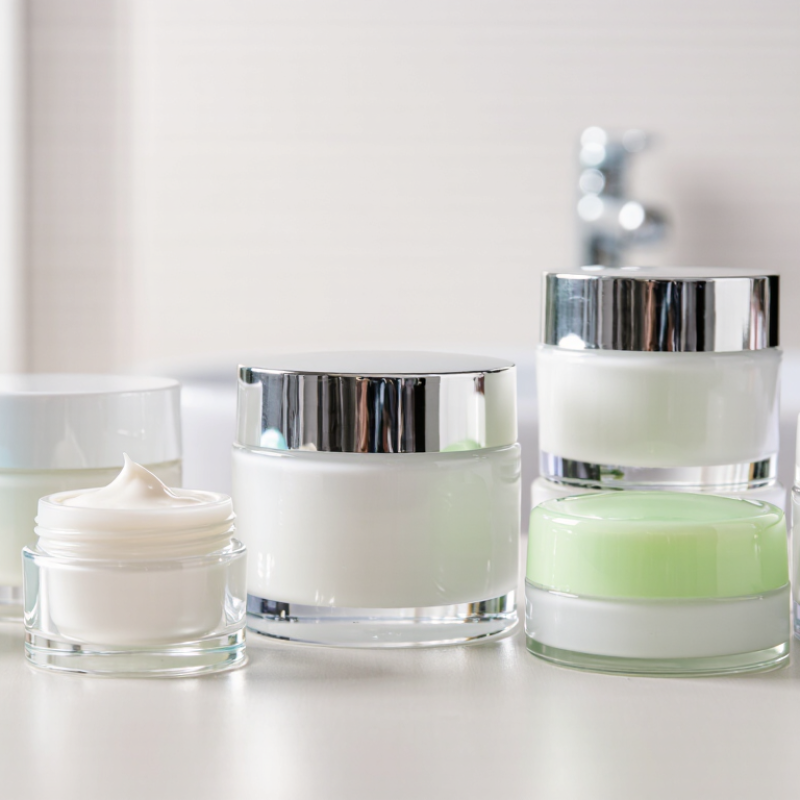
The 2026 glass skincare jar market is becoming more specification-driven.
Global buyers want reliable suppliers, not simply attractive packaging. Demand remains strong for 15 ml, 30 ml, and 50 ml jars. Clear, amber, and frosted finishes serve different product and positioning needs.
Experienced buyers usually check glass type, wall thickness, closure fit, and decoration durability. A jar may look premium but still fail during filling or transport. Ask suppliers for dimensional drawings, material declarations, and batch inspection records. Request samples from actual production lines. One sample is not enough. Suppliers should also explain their minimum order quantities, lead times, pallet protection, and replacement procedures. Requirements vary by destination, so packaging documents and cosmetic contact compliance must be verified locally.
Tips: Test the jar with your real formula for at least several weeks. Check leakage after repeated opening and closing. Inspect the inner rim under bright light. Small chips can affect filling efficiency. Confirm whether the supplier controls coating, printing, and assembly internally. This can reduce communication gaps, though it may not always lower costs. I have seen buyers focus too heavily on unit price and overlook breakage rates. That decision often becomes expensive. Supplier audits, transparent records, and practical samples create stronger purchasing confidence.
Evaluating global glass skincare jar manufacturers requires more than checking photos and price lists. Ask about glass type, wall thickness, closure fit, and decoration limits. A reliable supplier should provide technical drawings, material specifications, and recent inspection records. Request samples from regular production, not only polished showroom pieces. Small details matter. Check the jar’s weight, mouth diameter, lid alignment, and inner surface.
Manufacturing experience should match your product requirements. A supplier producing thick cream jars may not manage lightweight designs well. Review mold capability, color consistency, and tolerance control. Ask how defects are classified and recorded. Look for clear procedures covering cracks, bubbles, uneven rims, and printing errors. Independent testing can verify chemical resistance, drop performance, and compatibility with skincare formulas. Certificates help, but they do not replace physical inspection. A document may be valid while the actual shipment varies.
Tips: Compare at least three factories using the same specification sheet. Confirm minimum order quantities, sample charges, production lead times, and packaging methods in writing. Check carton strength and separator design before approving mass production. Ask whether recycled glass content affects color or clarity. Communication is another practical test. Do replies answer your questions precisely? Are changes tracked? Global shipping can expose weak planning, especially during peak seasons. A cheaper quotation may hide mold fees, replacement costs, or longer transit. Even experienced buyers can overlook closure compatibility. Recheck it with a filled sample before final approval.
| Evaluation Dimension | Recommended Buyer Benchmark | Evidence to Request | Why It Matters for Skincare Jars | Suggested Weight |
|---|---|---|---|---|
| Glass Material and Grade | Confirm soda-lime-silicate glass composition and the applicable hydrolytic-resistance classification. Use Type III or a higher resistance level when the formulation or regulatory market requires it. | Material specification, glass-grade declaration, batch traceability records, and hydrolytic-resistance test results based on applicable ISO 4802 or equivalent methods. | Glass composition influences chemical durability, product compatibility, appearance, and resistance to extractables from the container. | 12% |
| Product Compatibility | Require compatibility testing with the actual cream, balm, serum, oil, fragrance, or active ingredient over the intended shelf-life period and storage conditions. | Compatibility protocol, accelerated-aging results, migration or extractables assessment where relevant, and finished-pack observations. | Essential oils, acids, alcohols, surfactants, pigments, and active ingredients can affect seals, decoration, closures, or product stability. | 14% |
| Dimensional Accuracy | Approved drawings should define jar height, diameter, neck finish, thread or lug profile, wall thickness, base dimensions, fill volume, and allowable tolerances. | Controlled engineering drawing, inspection report, dimensional inspection equipment list, and first-article approval sample. | Consistent dimensions are required for closure fit, filling-line performance, label placement, stacking, and visual quality. | 10% |
| Closure and Seal Performance | Validate the complete jar system, including cap, liner, plug, gasket, or inner seal. Define leakage, torque, vacuum, and application requirements before mass production. | Torque specifications, leak-test results, seal-integrity records, closure compatibility data, and container-closure drawings. | A high-quality glass jar can still fail if the closure system leaks, dries out the formula, or allows air and contamination to enter. | 13% |
| Cosmetic Surface Quality | Set written acceptance limits for bubbles, stones, cords, seeds, checks, cracks, chips, mold seams, scratches, dirt, and uneven coloration. | Defect classification standard, approved golden sample, visual inspection procedure, lighting conditions, and nonconformance records. | Surface defects directly affect premium positioning, consumer perception, and the risk of rejection during filling or retail inspection. | 10% |
| Decoration and Color Control | For frosting, coating, printing, spraying, hot stamping, or labeling, approve artwork, color references, adhesion requirements, abrasion resistance, and chemical resistance. | Decoration specifications, color measurement records, adhesion test results, abrasion testing, and production approval samples. | Decoration must remain stable during filling, transport, handling, exposure to oils or alcohol, and normal bathroom conditions. | 7% |
| Quality Management System | Prefer a documented quality management system certified to ISO 9001 or an equivalent independently audited standard. Confirm corrective-action and change-control procedures. | Current certificate, audit summary, process-control plan, inspection records, CAPA examples, and documented change-notification policy. | A controlled quality system improves consistency across production batches and reduces recurring defects. | 9% |
| Sampling and Inspection | Use a written sampling plan, such as ISO 2859-1 or an agreed equivalent, with separate acceptance criteria for critical, major, and minor defects. | Sampling tables, inspection checklists, batch-release records, defect photographs, and independent inspection option. | Clear inspection rules prevent disputes about visual defects, quantity shortages, dimensional variation, and packaging damage. | 7% |
| Regulatory and Chemical Documentation | Provide current declarations relevant to the destination market, including restricted-substance information and packaging-material composition. Apply food-contact or pharmaceutical-packaging requirements only when relevant to the intended use. | Declaration of conformity where applicable, REACH-related information, restricted-substance statement, coating or ink declarations, and third-party test reports. | Documentation supports importer due diligence and helps identify risks from coatings, inks, pigments, adhesives, liners, and other components. | 10% |
| Production Capacity and Tooling | Confirm available forming, annealing, inspection, decoration, and assembly capacity for the required annual volume. Establish mold ownership, maintenance, and replacement terms. | Capacity statement, process-flow diagram, tooling agreement, maintenance schedule, equipment list, and production-capacity evidence. | Capacity transparency reduces the risk of supply interruptions, uncontrolled subcontracting, and inconsistent quality during scale-up. | 6% |
| Lead Time and Supply Continuity | Agree written lead times for tooling, samples, first production, repeat orders, and decoration. Define allocation rules for shortages and the required advance notice for delays. | Production schedule, order-confirmation template, business-continuity plan, backup-process information, and shipment-performance history. | Skincare launches and replenishment programs depend on predictable packaging availability, particularly for custom molds and decorated jars. | 5% |
| Packaging, Transit, and Damage Control | Use dividers, molded protection, pallet stability controls, and moisture-resistant outer packaging. Validate the packed configuration through distribution testing appropriate to the shipping route. | Packing specification, pallet pattern, loading photographs, drop or vibration test results, damage-rate records, and shipping claims procedure. | Glass is rigid but fragile; inadequate secondary packaging can create high breakage rates and hidden landed-cost increases. | 4% |
| Sustainability and Recyclability | Confirm that the jar is recyclable in the target market’s glass-recycling system and request transparent information about recycled cullet content, energy use, and decoration restrictions. | Material declaration, recycled-content statement, environmental certificates where available, energy or emissions data, and decoration-removability information. | Glass is widely recyclable, but coatings, mixed materials, pigments, and incompatible components can affect recycling outcomes. | 5% |
| Commercial Transparency | Compare total landed cost rather than unit price alone, including tooling, decoration, closures, inspection, packaging, freight, duties, breakage allowance, and payment terms. | Itemized quotation, tooling terms, incoterm, payment schedule, minimum order quantity, price-validity period, and surcharge policy. | A transparent cost model supports accurate launch budgets and prevents unexpected charges after tooling or approval. | 5% |
| Communication and Technical Support | Require a named technical contact, documented escalation process, response-time commitment, and support during design, sampling, filling trials, and corrective actions. | Organization chart, communication protocol, sample-development workflow, issue log, and post-approval support terms. | Early technical coordination helps resolve neck-finish, closure, decoration, filling, and transport issues before commercial launch. | 3% |
| Buyer-use note: The percentages are a practical RFQ scoring model and should be adjusted according to formula sensitivity, destination-market requirements, annual volume, decoration complexity, and distribution conditions. Request evidence for every claim and score only verified information. | ||||
Types of Glass Skincare Jars and Their Suitable Applications
Clear glass jars suit moisturizers, sleeping masks, and everyday creams that benefit from visible texture. They help buyers inspect color changes, filling levels, and surface defects during production. However, clear glass offers limited protection from light-sensitive ingredients. A dark formula may still need stronger light control.
Amber and cobalt-colored jars reduce light exposure for botanical creams, facial oils, and antioxidant-rich treatments. Frosted glass creates a soft, premium appearance for lotions and night creams. It can hide fingerprints, but frosting may make scratches harder to notice. Thick-wall jars work well for luxury balms, body butters, and spa products because they feel stable in the hand.
Wide-mouth jars are practical for clay masks, scrubs, and dense creams. Customers can remove the product easily with clean fingers or a spatula. Smaller jars support eye creams, travel sizes, and sample programs. For water-based formulas, buyers should check the cap liner, thread fit, and sealing performance. A poor closure can cause leakage or gradual contamination.
In practical packaging checks, I inspect the jar, lid, gasket, and decoration as one system. Glass compatibility matters too. Some essential oils or active formulas may affect coatings, liners, or printed surfaces over time. A supplier can provide samples, but one sample is not enough. Heat, transport vibration, and repeated opening may reveal weaknesses later. Even attractive glass can fail if its neck finish is inconsistent.
Common skincare jar capacities vary by product format. Eye creams are typically packed in smaller 15 ml jars, while face creams commonly use 30–50 ml jars. Larger formats such as sleeping masks and body butters generally require 75–100 ml containers. Soda-lime glass is widely used for standard skincare packaging, borosilicate glass is suitable for products requiring higher thermal and chemical resistance, and frosted or tinted glass is often selected for a premium appearance or improved light protection.
The best glass skincare jar suppliers in 2026 should prove quality through controlled production, not attractive samples alone. During supplier audits, I check glass clarity, wall thickness, closure fit, and batch consistency. A jar may look flawless under showroom lighting, yet show tiny chips after transport testing. Ask for inspection records, dimensional tolerances, and leak-testing results. Suppliers should also explain their quality system and provide traceable batch documentation.
Customization must support the formula and user experience. Choose suitable glass types, neck finishes, inner seals, and closure materials after compatibility testing. Creams containing oils, acids, or essential oils may react differently with liners and coatings. Request samples before approving decoration. Screen printing, frosting, and color matching can change after heating or repeated handling. I have seen elegant finishes fail during filling because the coating was not tested under real production conditions.
Sustainable packaging needs measurable choices. Suppliers can offer recycled glass content, lighter wall designs, refillable structures, and recyclable components. However, “eco-friendly” should not remain a vague claim. Review recycled content records, transport weight, and local recycling conditions. Lightweighting reduces emissions, but excessive reduction may increase breakage. That trade-off deserves honest discussion. Packaging teams should compare durability, carbon impact, and total material use instead of choosing the heaviest jar for a premium appearance.
Check the glass type, wall thickness, mouth diameter, lid alignment, and inner surface. A sample photo is not enough. Request technical drawings, material specifications, and recent inspection records.
Showroom samples may receive extra polishing or careful selection. Regular production samples reveal real variation, including bubbles, uneven rims, and printing errors. This step can feel repetitive, but it prevents expensive surprises.
Amber or cobalt-colored glass can reduce light exposure. They may suit botanical creams, facial oils, and antioxidant-rich treatments. Clear glass looks attractive but offers limited light protection.
Wide-mouth jars suit clay masks, scrubs, dense creams, and body butters. Users can remove thick products with a spatula more easily. Clean handling still matters.
Check the cap liner, thread fit, sealing performance, and closure torque. Fill the jar with your actual formula before approval. Then test leakage, odor, color change, and repeated opening.
Ask for batch records, inspection standards, dimensional tolerances, and drop-test results. Confirm how the supplier records cracks, bubbles, rim defects, and decoration errors. Certificates support review. They do not replace physical inspection.
Give at least three suppliers the same specification sheet. Compare three production samples under identical lighting and temperature. Review minimum order quantities, sample charges, lead times, and packaging methods in writing.
Inspect carton strength, separator design, and jar protection during transport. Vibration can expose weak packaging. A low factory price may exclude replacement costs, mold fees, or longer transit.
Not automatically. Ask whether recycled content changes color, clarity, or strength. Also consider transport distance and local recycling capacity. The greener option can be less obvious.
The 2026 global market for Glass Skincare Jar packaging is shaped by growing demand for product safety, premium presentation, customization, and sustainable solutions. Buyers increasingly evaluate suppliers according to glass quality, production capacity, consistency, lead times, communication, and ability to support international orders. Different jar types, including standard, thick-wall, frosted, tinted, and airless-compatible designs, can serve creams, balms, masks, serums, and other skincare formulations. Selecting the right structure and closure helps protect product performance while improving user experience.
Reliable suppliers should provide clear specifications, appropriate quality controls, secure packaging, and documentation that supports regulatory compliance in the target market. Custom options may include size, color, surface finishing, decoration, lids, and private packaging configurations. Recyclable glass, reduced-material designs, and reusable components can also support sustainability goals. Before purchasing, global buyers should compare samples, testing results, minimum order quantities, pricing, customization capabilities, logistics, and after-sales support to identify a dependable long-term manufacturing partner.
