Lecos
A Glass Concealer Jar may look simple on a product page. In practice, its weight, opening, inner finish, and lid fit can shape the user experience. A jar that feels substantial in the hand may also add shipping cost. Small details matter.
For global buyers, choosing a manufacturer involves more than comparing photos and unit prices. Sample jars can reveal uneven glass, rough edges, color differences, or lids that loosen during handling. Ask suppliers about available capacities, decoration options, minimum order quantities, production timelines, and protective packaging. Request clear specifications, too. A catalog may not show how a jar performs after repeated opening. That gap deserves attention.
This guide introduces ten manufacturers for buyers exploring glass concealer packaging. The companies may differ in product range, customization, and export support, so the right fit depends on your project. Some buyers need a standard jar for a fast launch; others need precise colors, printed branding, or coordinated components. There is no perfect choice for everyone. Compare samples against your formula and filling process, and confirm details in writing before placing an order. Supplier information can change, and a polished presentation is not proof of consistent quality. A little caution helps.
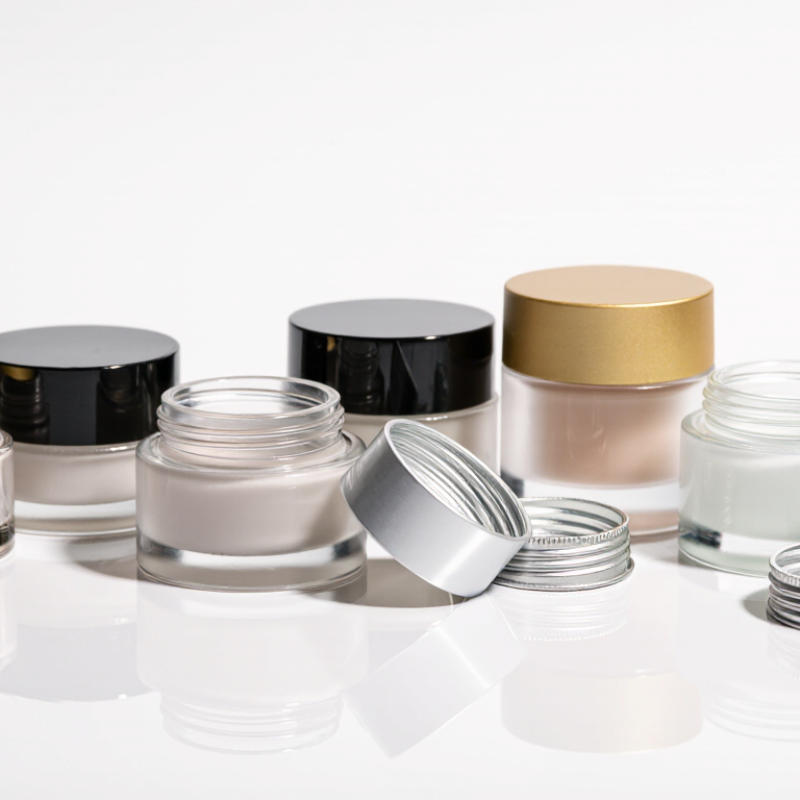
Glass concealer jars combine a visible package with a solid, protective feel. Most use soda-lime glass, which suits many cosmetic applications and supports clear, frosted, or colored finishes. A thick base can add stability on a dressing table, though it also adds weight. Amber or other tinted glass may reduce light exposure, but buyers should test whether the shade still shows the product accurately.
Formats range from low, wide jars to compact pots with screw-on caps. Wide openings make cream concealer easier to reach, especially with a small spatula. That convenience has a trade-off: fingers can introduce contamination, so the closure and user instructions matter. Small details matter. A liner can help create a closer seal, but its compatibility with the formula needs checking.
For global buyers, assess capacity, glass consistency, closure fit, and transit protection together. Ask suppliers for samples and test them with the intended formula, including checks for leakage, odor changes, and surface damage. A jar that looks elegant on a shelf may be awkward to carry. And glass can break. Packaging trials should reflect actual shipping conditions, not only a neat showroom display.
When comparing glass concealer jar manufacturers, begin with the jar itself, not the sales brochure. Ask for drawings showing capacity, neck finish, wall thickness, and dimensional tolerances. A few millimeters matter when a wiper, inner plug, or cap must fit cleanly. Check glass clarity, color consistency, and base stability under ordinary handling. Small details show production discipline.
Request physical samples from a production-representative run. Inspect edges, threads, seams, and the jar’s balance on a flat surface. Then test the actual formula in the intended package. Observe leakage, evaporation, discoloration, and applicator fit over time. A short test helps, but it does not replace longer compatibility checks. Ask how defects are recorded and corrected, and whether inspection criteria are shared before ordering.
Decoration deserves equal scrutiny. Confirm print alignment, coating durability, and whether surface treatments affect recyclability or appearance after handling. Review packaging for transit protection; glass can arrive chipped even when the sample looked perfect. Request clear information on minimum order quantities, production capacity, lead times, and change-control procedures. Evidence matters. Look for test reports and traceable quality records, not broad promises. A polished catalog can still hide gaps. I may overvalue neat samples; routine batch consistency is the harder question.
Use these criteria to compare manufacturers. The suggested weights are a buyer-oriented scoring model, not an industry standard. Confirm applicable requirements for the destination market and product.
| No. | Evaluation criterion | Suggested weight | Evidence to request | How to assess |
|---|---|---|---|---|
| 1 | Quality management system | 15% | Current quality-system certificate, scope, audit summary, and corrective-action records. | Check certificate validity and whether its scope covers the relevant manufacturing site and processes. ISO 9001 is a quality management system standard; certification alone does not guarantee product quality. |
| 2 | Dimensional consistency and defect control | 15% | Product drawings, inspection plan, sample inspection reports, and defect classification rules. | Review critical dimensions such as opening diameter, height, capacity, and finish. Agree acceptance limits and sampling rules before production; do not assume one tolerance fits every jar design. |
| 3 | Glass specification and product suitability | 12% | Glass type, color options, component specifications, and product drawings. | Confirm the proposed glass and finish suit the formula, filling method, storage conditions, and intended use. Request physical samples to check appearance, weight, opening, and compatibility with the selected closure. |
| 4 | Closure fit and functional testing | 10% | Jar-and-closure compatibility samples, fit checks, and agreed test results. | Test the actual jar, liner, cap, and any inner component as a system. Agree suitable checks—such as fit, opening and closing, leakage where relevant, and transit performance—based on the packaging design and product. |
| 5 | Customization and tooling capability | 10% | Tooling proposal, mold ownership terms, design review process, and sample-development schedule. | Confirm design feasibility, mold costs, maintenance responsibilities, and ownership or transfer terms in writing. Approve production against signed drawings and reference samples. |
| 6 | Decoration and finishing consistency | 8% | Decoration samples, process options, color-control method, and adhesion or durability test results where applicable. | Evaluate the intended finish—such as frosting, coating, printing, or labeling—on production-representative samples. Define color references, decoration placement, and acceptance criteria before ordering. |
| 7 | Production capacity and lead-time planning | 10% | Capacity statement, production schedule, minimum order quantity, and sample and reorder lead-time estimates. | Compare the committed schedule with your forecast and launch date. Ask how capacity is allocated and how delays, seasonal demand, or changes in order quantity are managed. |
| 8 | Traceability and documentation | 8% | Lot-identification method, inspection records, change-control procedure, and product documentation. | Verify that production lots can be identified and linked to relevant inspection records. Agree how material, process, or specification changes will be communicated and approved. |
| 9 | Environmental management and material information | 7% | Environmental policy or relevant certification, packaging-material details, and available recycled-content information. | Check whether claims are documented and applicable to the specific product and site. ISO 14001 concerns environmental management systems; it is not a product-level environmental certification. |
| 10 | Export packaging and commercial reliability | 5% | Export packing specification, shipping terms, quotation details, and claims or replacement procedure. | Review carton protection and pallet configuration for the shipping route. Confirm currency, payment terms, Incoterms® rule and named place, delivery responsibilities, and the process for reporting transit damage. |
| Total suggested weighting | 100% | Score each supplier against the same documented requirements. | ||
Top 10 Glass Concealer Jar Manufacturers for Global Buyers
A useful top-ten shortlist should compare production capability, not just polished product photos. Glass packaging is a broad and growing market. Grand View Research valued it at USD 66.8 billion in 2023 and projected 4.4% annual growth from 2024 to 2030. This figure covers glass packaging overall, not concealer jars alone. For buyers, it signals a competitive supply base, but not a guarantee of quality. Check each manufacturer’s experience with small cosmetic jars, glass weight, neck finish, and decoration options. Ask for sample jars with the intended cap and applicator. Tiny fit problems become obvious fast.
Compare suppliers on minimum order quantity, lead time, color consistency, packaging protection, and export experience. Request written tolerances for jar capacity and dimensions. Ask how defects are inspected and handled. A factory audit or video walkthrough can help confirm production details, though it cannot replace testing samples. No supplier wins every brief. A lower unit price may mean added freight, breakage, or slower replenishment. The best fit depends on your volume and launch schedule.
Tips: Test a filled jar through shipping simulation, not only on a desk. Check the cap after repeated opening. Keep one approved sample as your reference; small differences can be easy to overlook.
Representative nominal sizes commonly offered in cosmetic packaging catalogs. These are capacity examples, not manufacturer or market-share data.
Smaller 5–15 mL jars are practical options for concealer and other compact cosmetic products, while larger capacities can suit creams and multipurpose cosmetics. Actual sizes vary by supplier.
When comparing glass concealer jar manufacturers, look beyond a catalog’s headline capacity. A useful range may include several jar sizes, clear and frosted glass, and compatible lids or inner discs. Check whether dimensions stay consistent across the range; a lid that fits one sample may not fit a production run. Small details matter.
Customization can cover color, surface finish, printing, and packaging components. Ask for physical samples and written specifications before approving artwork. Confirm decoration methods, minimum order quantities, mold costs, and sample lead times. These details affect both budget and schedule. A custom shade may look different under warehouse lighting than it does on a screen. That happens.
Production capability is not just a large factory or a fast quotation. Buyers should ask how a supplier controls jar weight, neck finish, visual defects, and fit with closures. Request inspection criteria and clarify how rejected units are handled. For international orders, discuss packing tests, pallet plans, and production capacity during peak periods. A polished sample can still hide a weak process. I would compare documented controls with the sample, not assume one proves the other. The best fit depends on the buyer’s volume, finish requirements, and tolerance for lead-time changes.
Global sourcing for glass concealer jars begins with a clear product brief. Specify capacity, glass color, neck finish, decoration, and the closure type before comparing manufacturers. A jar may look elegant in a catalog yet feel awkward in the hand. Small details matter.
Request production samples, drawings, and written tolerances. Check rim smoothness, base stability, thread fit, and visible bubbles under bright, even light. Then test the jar with the intended concealer and closure. Watch for leakage, difficult opening, or residue around the neck. A simple drop test in suitable transit packaging can reveal weak points, but it cannot predict every shipping condition.
Ask suppliers how they inspect incoming glass and finished batches, and request recent inspection records where available. Confirm carton dimensions, pallet arrangement, lead times, and which party handles freight coordination. For cross-border orders, keep specifications and approved sample photos in one shared document. Even a careful checklist can miss a small finish change between samples and mass production; schedule a pre-shipment inspection when the order warrants it. The extra step may feel slow, but replacing damaged or inconsistent jars is slower.
Most use soda-lime glass. It can be clear, frosted, or colored.
Not always. Test the shade with the product inside before choosing a finish.
A wide opening makes cream easier to reach with a small spatula. It can also expose the product more during use.
Check thread fit, rim smoothness, capacity, and sealing. A liner may help, but test its compatibility with the formula.
Inspect samples for bubbles, rough edges, uneven color, and poor balance. Small flaws matter.
Watch for leakage, odor changes, discoloration, evaporation, and residue around the neck. Short tests are not enough.
Test the transit packaging under realistic shipping conditions. A neat showroom sample proves little.
Request drawings, written tolerances, inspection records, and clear defect procedures. I may overvalue polished samples; batch consistency is harder to judge.
This article offers a practical overview of Glass Concealer Jar options, from common glass materials and jar formats to their uses in cosmetic packaging. It explains how buyers can assess manufacturers by considering product quality, design consistency, customization services, production capacity, communication, and delivery reliability. These criteria can help narrow a supplier shortlist and set clear expectations before requesting samples or quotations.
The article also compares manufacturers’ product ranges and capabilities, including choices in jar size, shape, color, decoration, and closure compatibility. For global sourcing, it highlights the value of reviewing samples, checking packaging specifications, confirming inspection procedures, and planning shipment requirements in advance. Together, these considerations help buyers make informed comparisons and select a Glass Concealer Jar supplier whose products and processes suit their needs.
